Practicum 2264 | Professor David Trevino
Stefano Casafranca
Strategic Planner, Citizenship and Tech Initiatives
Background
Who I Am
Born and raised. Product design background.
Moved here to pivot into the tech scene. Graduating from ACC, May 14th.
Products / AI systems that meet real-world institutions and serve real people at scale, reliably with the less friction and in the shortest time possible.
The Organization
Center for Government
and Civic Service
CGCS trains and empowers students to be impactful civic leaders. Its initiatives provide students the skills, confidence, and sense of belonging to succeed in meaningful careers.
My Role
What I Actually Did
AI Agent Engineering
Claude Code, Codex, Gemini CLI, LangGraph orchestration, LangSmith observability


AI-Assisted Project Management
Obsidian as structured memory, wiki-as-router imitating vector RAG for decision-making

White Papers and Reports
AI environmental impact report for state leadership, weekly activity reports to VP
CGCS Event Intake Automation
In progress. CLI best practices and coding concepts hard to grasp for a non-technical team.
Program Design
16-week AI internship: NACE-compliant syllabus, recruiting pipeline, team structure
Web Development
CGCS website from zero in Astro: event pages, programs, public content
Events and Partnerships
AAIA Summer Intensive, SerpApi, Cloudflare, AI Alliance, Handshake pipeline
My Stack
The Three Tools That Made It Work
 Claude Code
AI agent engineering, autonomous coding, multi-file orchestration
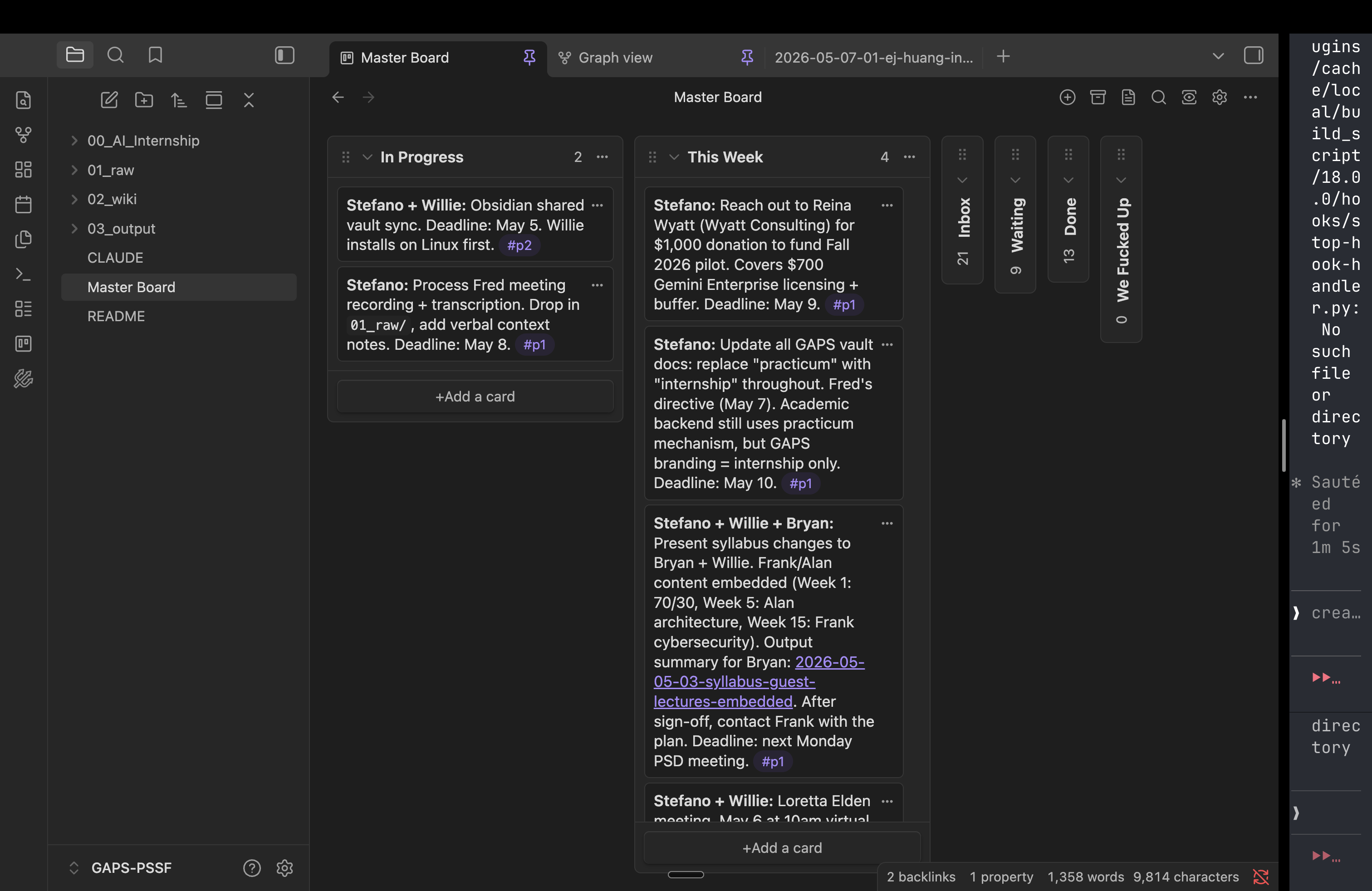 Obsidian Master Board
Structured memory, kanban tracking, wiki-as-router for decisions
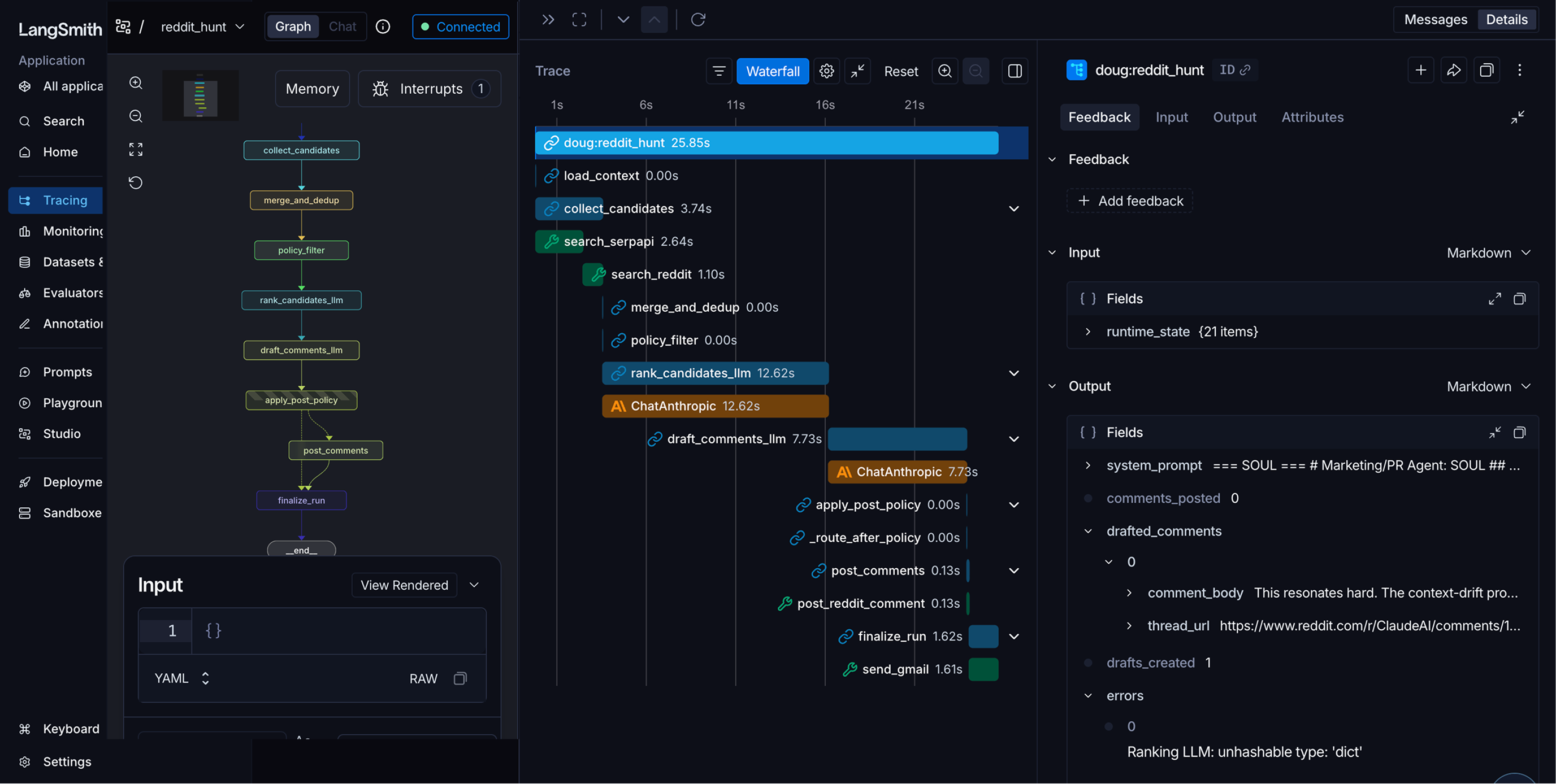 LangSmith Observability
Trace every agent run, debug failures, measure reliability
Flagship Project
GAPS Internship
Generative AI in Public Service
First Client: ACC Honors Program
User research to find pain points, then build an AI tool or agent that reliably solves them. Students build real tools for real people.
I wrote the NACE-compliant curriculum, the recruiting pipeline, and the syllabus. Launching Fall 2026.
The Good
What I Liked
I co-led a program: NACE compliance, syllabus, recruiting pipeline, info sessions. My name is on the work.
Monday: white paper for state leadership. Wednesday: building the CGCS website. Friday: running a student info session.
Reported to a VP, sat in rooms with department heads, learned how institutional decisions actually get made.
GAPS launches Fall 2026 with real students and real clients. The Honors Program gets an AI tool built from user research. Tangible outcome.
The Real
Challenges and How They Got Solved
Institutional Pace + Coordination Tax
Work takes 50%. Waiting for next steps and connecting with the right people takes the other 50%.
Solved by: My Boss
Bryan had the authority to unblock bottlenecks: IT, cross-department approvals, finance.
Extreme Context Switching
Website, curriculum, events, partnerships, recruiting in the same week. No system to track it.
Solved by: Obsidian
Structured vault: dashboards, kanban boards, wiki-as-router. Every task and decision in one place.
Keeping Up with CLI Engineering
The role was mostly program design. Staying technical required effort outside work hours.
Solved by: Austin LangChain Meetups
Free, open to anyone, hosted at CGCS. Visit cgcs-acc.org for the next one.
Reflections
What Classes Did Not Teach Me
Conclusion
Learn What I Learned
Apply to the GAPS Internship
Non-paid. 16 weeks. Build real AI tools for real public-sector clients. Fall 2026.
Info Session: May 15 at Highland
12:00 PM and 4:00 PM, in front of the Make It Center
Info Session: June 3, Online
12:00 PM and 4:00 PM
cgcs-acc.org/gaps
Thank you. Questions?